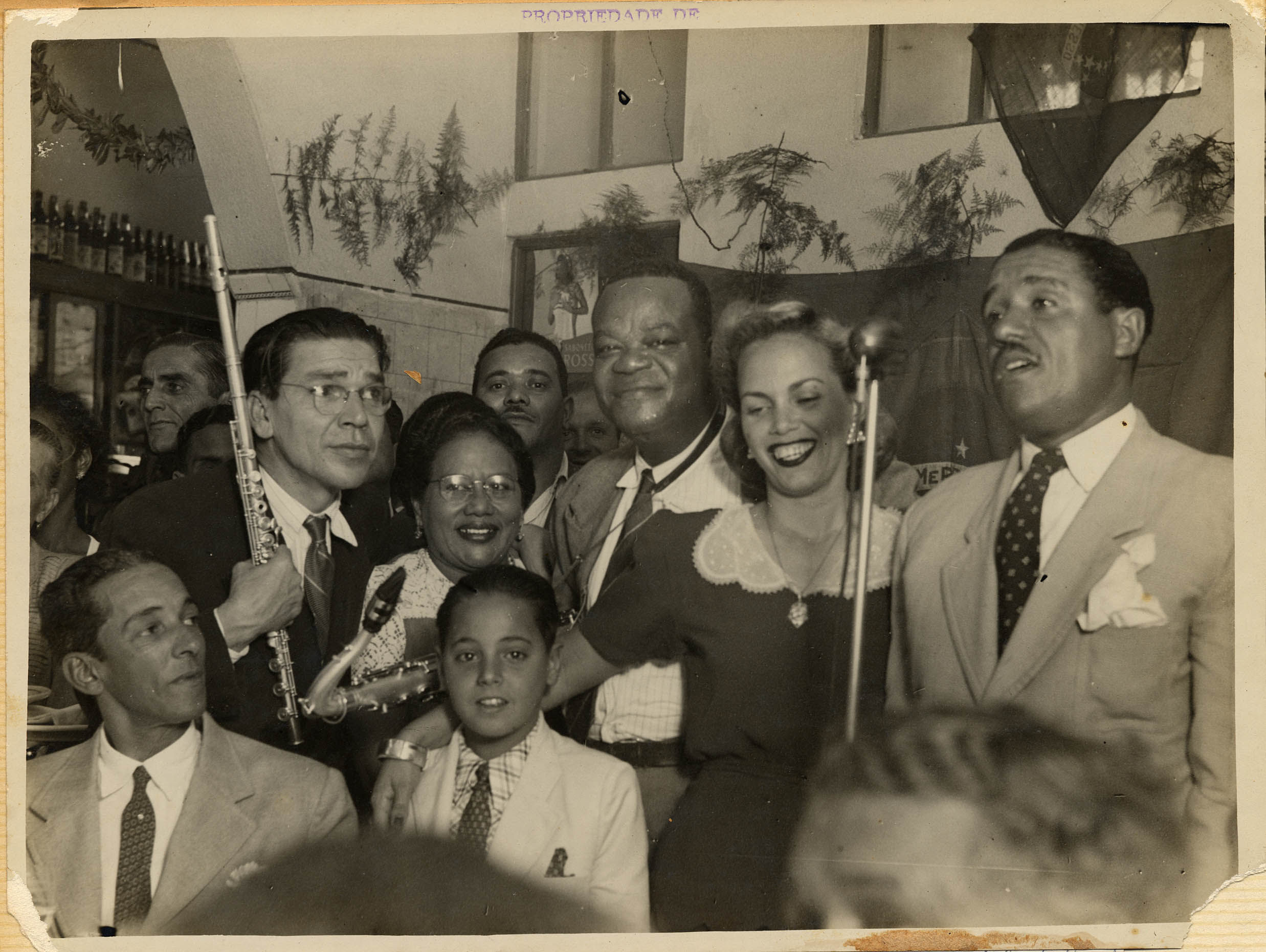
Choro emerged among lower and middle working classes formed in the context of the abolition of slavery and modernization in the city of Rio in the second half of the 19th century. Workers found entertainment at gatherings in family homes, where amateur musicians performed European dances such as polkas, mazurkas, or schottisches with a lamenting character, likely the origin of the term “choro” (Portuguese for “crying”). In this setting, new choro melodies were often notated in sheet music. Today, choro is typically practiced in the traditional form of rodas de choro (“choro circles”) both in Brazil and in Europe by communities of diasporic Brazilians.
A central institution for promoting and preserving choro is the Instituto Casa do Choro (ICC) in Rio de Janeiro. ICC operates the largest choro archive in the world, with over 28,000 catalogued scores. Most of the material available through ICC do not contain chord symbols, rendering it impractical for today’s musicians who often rely on lead-sheet style of scores. Experts at ICC manually provide “harmonizations”, i.e. the annotation of chord symbols, for choro melodies. These harmonizations are time-consuming and require expert knowledge of the style.
Recent developments in the field of artificial intelligence and machine learning suggest that these technologies could be used to automatically generate such harmonizations, greatly accelerating this process and increasing the accessibility of the archive material. The main objective of this project is to develop and improve algorithms that carry out this task and to critically evaluate their reception by the involved actors. The project thus addresses pressing societal issues related to the technical feasibility of automatic harmonization, and to the social acceptance of AI by musical communities.